

Unveiling the Costs: How Much Does It Take to Own a Racehorse in Dubai?
Introduction
Imagine standing at the edge of a pristine parade ring at Meydan, watching finely tuned thoroughbreds thunder past under the desert sun—owning one of those majestic creatures is a thrilling dream for many. But beyond the allure lies a question every potential owner must face: what’s the real cost to make that dream a reality? When exploring decisions around how much does it cost to own a racehorse in Dubai? this introduction sets the stage by breaking down the elements that transform a romantic notion into concrete, actionable insight.
Setting the Scene: Why Cost Matters
Owning a racehorse in Dubai is far from a casual purchase—it’s a significant financial undertaking that commands both respect and clarity. The annual outlay for traditional sole ownership often exceeds AED 150,000 to 200,000, encompassing training, veterinary care, farrier services, transport, and race entry fees, even before considering the initial purchase price of the horse itself RaceX guide. This provides a realistic benchmark and emphasizes why understanding costs upfront is essential for making informed decisions.
Emerging Alternatives: Syndication and Accessibility
Fortunately, Dubai’s racing industry offers innovative ownership models that lower the financial barrier. Syndicates such as RaceX enable individuals to own a fraction of a horse with fixed annual fees—for example, a full ownership cost can exceed AED 250,000 per year, whereas fractional shares may start as low as AED 5,000, depending on the horse and available shares RaceX FAQ. This contrast highlights a compelling path for enthusiasts to participate in high-end racing without the traditional expense.
The Value Proposition: More Than Numbers
The cost analysis extends beyond dollars and dirhams; it is intricately tied to access, lifestyle, and experience. Whether considering sole ownership or shared models, owners gain entry to world-class facilities, stable visits, race day access, and a stake in high-value prize pools. These qualitative elements underscore the multifaceted value embedded in the numbers and ensure that cost discussions aren’t purely transactional.
In the coming sections, we will dive deeper into ownership cost breakdowns—both traditional and syndicated—evaluate ongoing expenses versus potential prize returns, and explore real-world examples to guide prospective owners through the nuanced journey of deciding just how much it truly costs to own a racehorse in Dubai.
The Cost of Traditional Ownership in Dubai
Maintaining clear continuity from earlier content, here we shift focus toward the real expense of sole ownership—a crucial counterpoint to syndication models that often obscure the full financial picture. When considering how much does it cost to own a racehorse in Dubai?, traditional ownership stands out for its financial intensity and commitment.
Annual Expense Breakdown
Eyeballing current market expectations, owning a racehorse outright in Dubai typically surpasses AED 150,000 to AED 200,000 per year. This covers a range of essential services, such as training fees (AED 72,000–120,000+), veterinary care (AED 10,000–40,000), farrier services, transportation, and race entry costs, without even including the horse’s purchase price RaceX Dubai syndication guide racex.ae.
Such figures highlight the high-cost threshold for individual ownership in this racing hub. These expenses reflect the premium facilities at Meydan and other premier tracks, underscoring the significant financial barrier for many.
Return on Investment in Context
Despite the steep outlay, Dubai offers an attractive competitive proposition: according to the Emirates Racing Authority, traditional ownership in the UAE returned AED 230 for every AED 100 spent on upkeep and training—more than double the return seen in 1998, when it stood at AED 132 per AED 100 emiratesracing.com. This high ratio reflects generous prize purses, often at least USD 15,000 per race, and the government-backed structure that boosts prize-money opportunities emiratesracing.com.
Still, achieving these returns requires not only investment capacity but also performance success on the track—an inherently uncertain variable.
Case Studies & Syndicate Contrast
For valuable contrast, syndication models such as RaceX dramatically alter this financial calculus. While full ownership exceeds AED 150,000 annually, RaceX provides fixed annual shares with the current Asaassi offer starting at AED 2,000 for a 0.5% share—handling all training, veterinary, administration, and support costs under one umbrella RaceX official overview racex.ae.
This structure underscores the keyword subtly: individuals wondering how much does it cost to own a racehorse in Dubai? will find themselves comparing the high stakes of traditional ownership against the clearly defined, budget-friendly model offered by modern syndication options.
In summary, while traditional ownership conveys prestige and control, its costs are formidable. Understanding these financial variables lays a foundation for exploring smarter, more flexible alternatives in the upcoming sections.
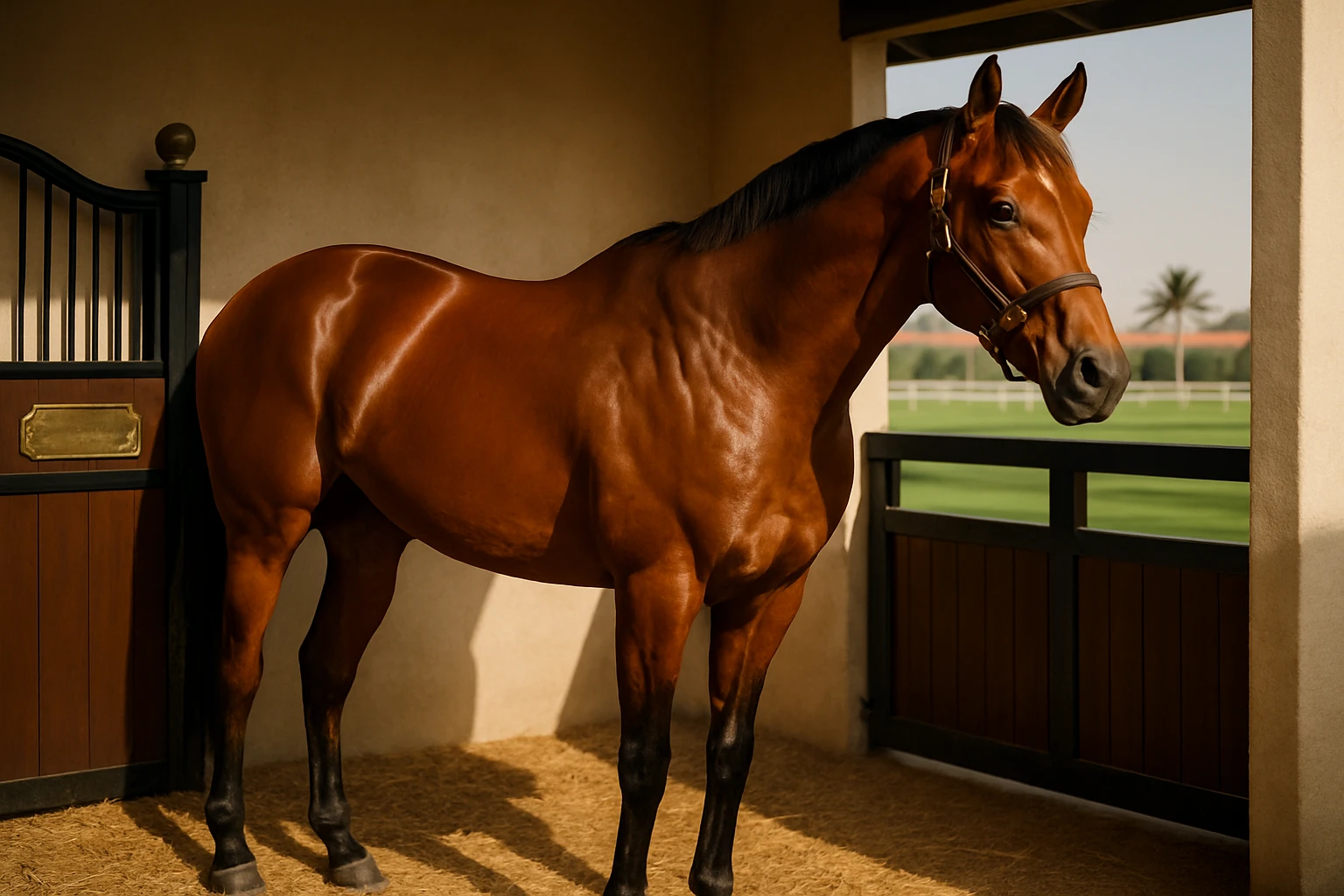
A gleaming chestnut racehorse stands in a sunlit stable at Meydan Racecourse, its coat shining under the warm desert sun, while elegantly engraved brass nameplates and lush green paddocks hint at the luxury and cost of ownership in Dubai.
Understanding the Costs of Training and Upkeep
When considering how much does it cost to own a racehorse in Dubai?, understanding the expenses associated with training and upkeep is essential. The climate in Dubai, along with the city’s prestigious racing scene, means that training facilities and skilled trainers command premium prices. It’s not uncommon for training packages at top stables to range from $30,000 to $50,000 per year.
The Role of Specialized Care and Veterinary Services
The desert environment of Dubai requires specialized horse care, contributing significantly to the cost. Access to veterinarians with expertise in equine sports medicine is critical for maintaining peak performance and overall health. The average cost of veterinary services can vary, but you should budget around $7,000 to $10,000 annually for routine check-ups, vaccinations, and emergency care.
Platforms such as RaceX offer insights into optimizing care schedules and can connect owners with vetted professionals, ensuring your horse receives the best possible treatment. These services are indispensable in preventing injuries and managing any health issues that arise.
The Importance of High-Quality Feed and Supplies
Feeding a racehorse is another critical expense, as nutrition is pivotal to a horse’s development and success on the track. In Dubai, where high-quality feed mixtures are specially formulated, one can expect to pay upwards of $2,500 yearly per horse. This investment supports everything from muscle development to immune system resilience.
With a plethora of suppliers, choosing the right feed requires an understanding of a horse’s dietary needs. Consulting with equine nutritionists can ensure your horse thrives, aligning with the practices of top racing operations who leave no stone unturned in pursuit of victory.
Ultimately, these elements of training, specialized care, and nutrition are integral to understanding the true cost of owning a racehorse in Dubai. Proper management of each aspect not only enhances performance but also safeguards the substantial investment owners make into their esteemed equine athletes.
Traditional Ownership vs. Syndication: Comparing Costs and Value
Outright Ownership Expenses in Dubai
Owning a racehorse outright in Dubai involves substantial recurring costs beyond the initial purchase. For example, annual training fees alone can range between AED 72,000 and AED 120,000. On top of that, veterinary expenses typically range from AED 10,000 to AED 40,000 annually, excluding additional costs like farrier services, transportation, race entry fees, and administration. Altogether, total annual expenses for full ownership easily exceed AED 150,000 to AED 200,000 per year. These figures illustrate why understanding how much does it cost to own a racehorse in dubai? requires considering more than just the purchase price—ongoing operational costs are the real commitment RaceX guide, RaceX FAQ.
Syndication as a Cost-Effective Alternative
To make racehorse ownership more accessible, syndication models like RaceX offer a compelling alternative. Instead of shouldering the full cost, owners pay a fixed annual membership fee—typically starting from AED 1,450 for a 0.2% combined ownership share in two horses or AED 5,000 for a 2% share package. These fees cover all major costs: training, veterinary care, and stable management—eliminating surprise fees and providing clear financial predictability. Owners also receive engaging experiences such as track visits, stable access, updates from trainers and jockeys, and a share of 75% of prize money earned RaceX’s pricing page.
Real-World Example of Syndication vs. Sole Ownership
Consider a sole-owner scenario costing around AED 180,000 annually for training, vet, and associated racing expenses. In contrast, a syndicate owner paying AED 5,000 for a 2% share would effectively invest AED 250,000 equivalent if owning outright, but only pays a small fraction and still enjoys the racing experience and financial upside. This is why the question of how much does it cost to own a racehorse in dubai? often opens more value for syndicate participants, who gain access without full exposure to the financial burden.
Choosing the Right Ownership Path
Deciding between outright ownership and syndication hinges on your goals, budget, and appetite for risk. If you seek deep involvement, control over racing decisions, and potentially higher returns, traditional ownership may appeal—albeit at a much higher cost. On the other hand, syndication offers an excellent balance of affordability, shared financial responsibility, and immersive racing experiences. Either way, clarity around costs and expectations helps prospective owners make informed decisions tailored to their financial comfort and racing ambitions.

Aerial view of a luxurious equine training facility in Dubai, featuring expansive sand tracks winding through the desert landscape, lined with palm trees, and a series of sleek, modern stables with reflective solar panels on the roofs, emphasizing both sustainability and opulence.
Conclusion
Understanding the cost of owning a racehorse in Dubai paints a detailed picture of both luxury and commitment. Owners must consider both the initial purchase and the ongoing expenses of maintaining a world-class competitor. From stabling in state-of-the-art facilities to employing top trainers and veterinarians, each component significantly impacts the overall cost and value of this investment.
Two primary factors dominate the expenses: the initial purchase and the monthly maintenance costs. Purchasing a racehorse can range from thousands to several million dollars, depending on the pedigree. Additionally, monthly training and care can add up to significant sums, often reaching into the tens of thousands per month. For those looking to minimize costs, forming a syndicate remains a feasible option. By sharing ownership with others, individuals can enjoy the thrill of the sport without bearing the full financial burden.
Actionable insights for prospective owners include detailed budgeting and leveraging available resources. Seasoned owners recommend setting aside a contingency fund to cover unexpected costs such as medical emergencies or additional training needs. Moreover, engaging with experienced professionals is crucial. Ensure you’re consulting with expert trainers and veterinarians who can guide your investment judiciously.
Diligent research and strategic partnerships with local businesses, such as RaceX, provide invaluable support. RaceX offers comprehensive services tailored to new owners, including guidance on selecting horses and navigating Dubai’s competitive landscape. Their platform can be a useful starting point for those ready to embark on this exciting journey.
In summary, while owning a racehorse in Dubai is a significant financial commitment, careful planning and leveraging partnerships can enhance both the experience and potential returns. By understanding the industry dynamics, aligning with seasoned professionals, and utilizing platforms like RaceX, prospective owners can position themselves for success. Whether driven by passion for the sport or the allure of the Emirate’s racing prestige, taking calculated steps will ensure a rewarding venture.